

What is Google Ask Maps? How the New AI Feature Changes Local Search
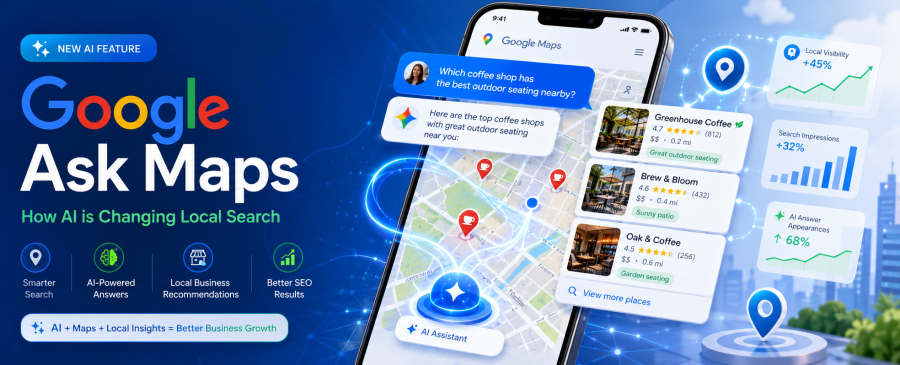
Google is continuously improving how people find local businesses, and its latest innovation, Google Ask Maps, is changing the way users search on Google Maps. Instead of simply searching for a business category or location, users can now ask more detailed questions and receive AI-powered recommendations directly within Google Maps.
For businesses that rely on local visibility, this update creates new opportunities and challenges. Understanding how Google’s AI works can help you stay ahead and improve your local search performance.
In this guide, Map Ranks breaks down exactly how to optimize your Google Business Profile for AI Overviews in 2026 step by step so your business gets seen first, even in an AI-powered search world.
Key Takeaway:
- Traditional keyword searches are evolving into conversational, AI-driven local searches.
- Google Ask Maps uses AI to provide personalized local business recommendations based on user questions and intent.
- Businesses with optimized profiles are more likely to appear in Google Maps AI recommendations.
- Google Business Optimization is becoming increasingly important for local visibility and customer discovery.
- Customer reviews, ratings, photos, and complete business information play a major role in AI recommendations.
- GEO (Generative Engine Optimization) helps businesses become more visible in AI-generated search results.
- Consistent business information across the web improves trust and local search performance.
- High-quality, locally relevant website content supports both local SEO and AI-powered search visibility.
What is Google Ask Maps?
Google Ask Maps is an AI-powered feature that allows users to ask natural language questions within Google Maps and receive personalized recommendations. Instead of typing “restaurants near me,” users can ask questions like:
- Which coffee shop has the best outdoor seating nearby?
- What are the top-rated family-friendly restaurants in this area?
- Which local businesses are open late and highly recommended?
Google’s AI analyzes business information, customer reviews, ratings, website content, and other local signals to provide relevant recommendations.
This means businesses are no longer competing only for traditional map rankings. They are also competing to become part of Google’s AI-generated recommendations.
Why Google Ask Maps Matters for Local Businesses
The rise of Google Maps AI recommendations is changing local search behavior. Customers are becoming more conversational in their searches, and AI is helping them find answers faster.
Businesses with complete profiles, positive reviews, accurate information, and strong online authority are more likely to be recommended by Google’s AI.
If your business information is outdated or your online presence is weak, you may miss opportunities to appear in these AI-driven results.
How AI Chooses Local Recommendations
Google’s AI evaluates multiple factors before suggesting businesses to users. These include:
- Google Business Profile completeness
- Customer reviews and ratings
- Business relevance to the query
- Website content and local authority
- Business categories and services
- User engagement signals
- Consistency of business information across the web
This is where Google Business optimization becomes essential. A well-optimized business profile helps Google understand your services and increases the chances of being recommended in AI-generated results.
How to Improve Your Visibility in Google Ask Maps
As AI-powered local search evolves, businesses should focus on providing clear, trustworthy, and detailed information.
Here are some practical steps:
1. Optimize Your Google Business Profile
Keep your business details accurate and updated. Include:
- Business description
- Services and products
- Business hours
- Photos and videos
- Contact information
The more complete your profile is, the better Google can understand your business.
2. Collect Authentic Customer Reviews
Reviews play a significant role in AI recommendations. Encourage satisfied customers to leave genuine feedback and respond professionally to reviews.
3. Create Helpful Local Content
Publish content that answers common customer questions and highlights your expertise. This strengthens your local authority and helps Google connect your business with relevant searches.
4. Maintain Consistent Business Information
Ensure your business name, address, phone number, and website details are consistent across all online platforms.
5. Focus on User Experience
Fast-loading websites, mobile-friendly design, and clear service information help build trust and improve visibility.
Case Study: How Local Optimization Improved Visibility
A local home services business struggled to generate leads through Google Maps despite having a verified business profile. After focusing on Google Business Optimization, the company updated its business description, added service-specific photos, responded to customer reviews, and regularly published local content on its website.
Within a few months, the business saw noticeable improvements in profile engagement, including more direction requests, phone calls, and website visits. The optimized profile also began appearing more frequently for relevant local searches and AI-generated recommendations.
This example highlights an important lesson: businesses that provide accurate information, maintain strong customer reviews, and demonstrate local expertise are better positioned to benefit from emerging features such as Google Ask Maps and other AI-powered local search experiences. You can explore more Google Maps ranking case studies to see how businesses have improved their local visibility through strategic optimization.
Why This Matters
As Google’s AI becomes better at understanding user intent, it increasingly favors businesses that demonstrate trust, relevance, and expertise. Companies that invest in GEO strategies and Google Business Optimization today are more likely to appear in future AI-driven local search recommendations.
The Connection Between GEO and Google Ask Maps
Generative Engine Optimization (GEO) focuses on helping businesses appear in AI-generated answers and recommendations. As Google continues integrating AI into search and maps, GEO becomes increasingly important.
Instead of optimizing only for keywords, businesses must optimize for context, relevance, trust, and user intent. The businesses that provide the most useful and reliable information are more likely to appear in AI-generated local recommendations.
How Map Ranks Helps Businesses Stay Ahead
At Map Ranks, we help businesses adapt to the future of local search through strategic Google Business Optimization and local SEO solutions. Our goal is to help businesses improve Google Map ranking, strengthen local visibility, and increase their chances of appearing in Google’s AI-powered recommendations.
As Google Maps becomes more intelligent, businesses need a smarter approach to local optimization. By focusing on accurate information, customer trust, and GEO-driven strategies, businesses can position themselves for long-term success in the evolving local search landscape.
Final Thoughts
Google Ask Maps represents a major shift in how customers discover local businesses. AI-powered recommendations are becoming a key part of the customer journey, making visibility more important than ever.
Businesses that invest in optimization, customer experience, and trustworthy online information will be better positioned to benefit from the growth of Google Maps AI recommendations. By implementing effective Google Business optimization strategies, you can improve your Google Maps ranking and increase your chances of being discovered through the next generation of local search.
As AI-powered local search continues to evolve, businesses need smarter optimization strategies to stay ahead. Contact Map Ranks today to learn how we can help improve your Google Maps rankings and local search visibility.
Frequently Asked Questions
How is Google Ask Maps different from normal Google Maps search?
Traditional Google Maps search mainly works through keywords and categories, while Ask Maps uses AI to understand user intent, preferences, reviews, business details, and context before recommending places.
Does Google Ask Maps affect local SEO?
Yes. Google Ask Maps is changing local SEO by focusing more on business relevance, review quality, profile optimization, and user experience instead of only keyword rankings.
How can businesses appear in Google Maps AI recommendations?
Businesses can improve their visibility by optimizing their Google Business Profile, collecting authentic customer reviews, adding updated photos, maintaining accurate business information, and creating location-focused content.
Does website content still matter for Google Maps rankings?
Yes. Google still evaluates website authority, local relevance, service pages, and content quality while deciding which businesses to recommend in AI-powered results.
How does GEO help businesses in Google Ask Maps?
Generative Engine Optimization (GEO) helps businesses optimize content for AI-generated recommendations. GEO focuses on trust, context, user intent, and content quality to improve visibility in AI search experiences.

Map Ranks is a local SEO agency that helps businesses get found fast on Google Maps and local pack. Our team specializes in Google Maps Marketing, SEO, and optimization strategies designed to boost your visibility, attract nearby customers, and grow your local presence. We make sure your local business stands out right where it matters; on the map and in front of the people searching for you.